In depth
Foundation Crack Repair in San Antonio: how the job actually runs
Foundation crack repair in San Antonio is two jobs, and the order matters. The first is reading the crack: is it the clay breathing, a finish problem, a leak under the slab, or the house moving. The second is fixing it, which for a structural crack means fixing the cause and then, once the foundation is stable, bonding the concrete back together with epoxy. Filling a crack on a house that is still moving is a way to buy the same crack again next year, wider, so the evaluation comes first every time.
Where the cracks come from
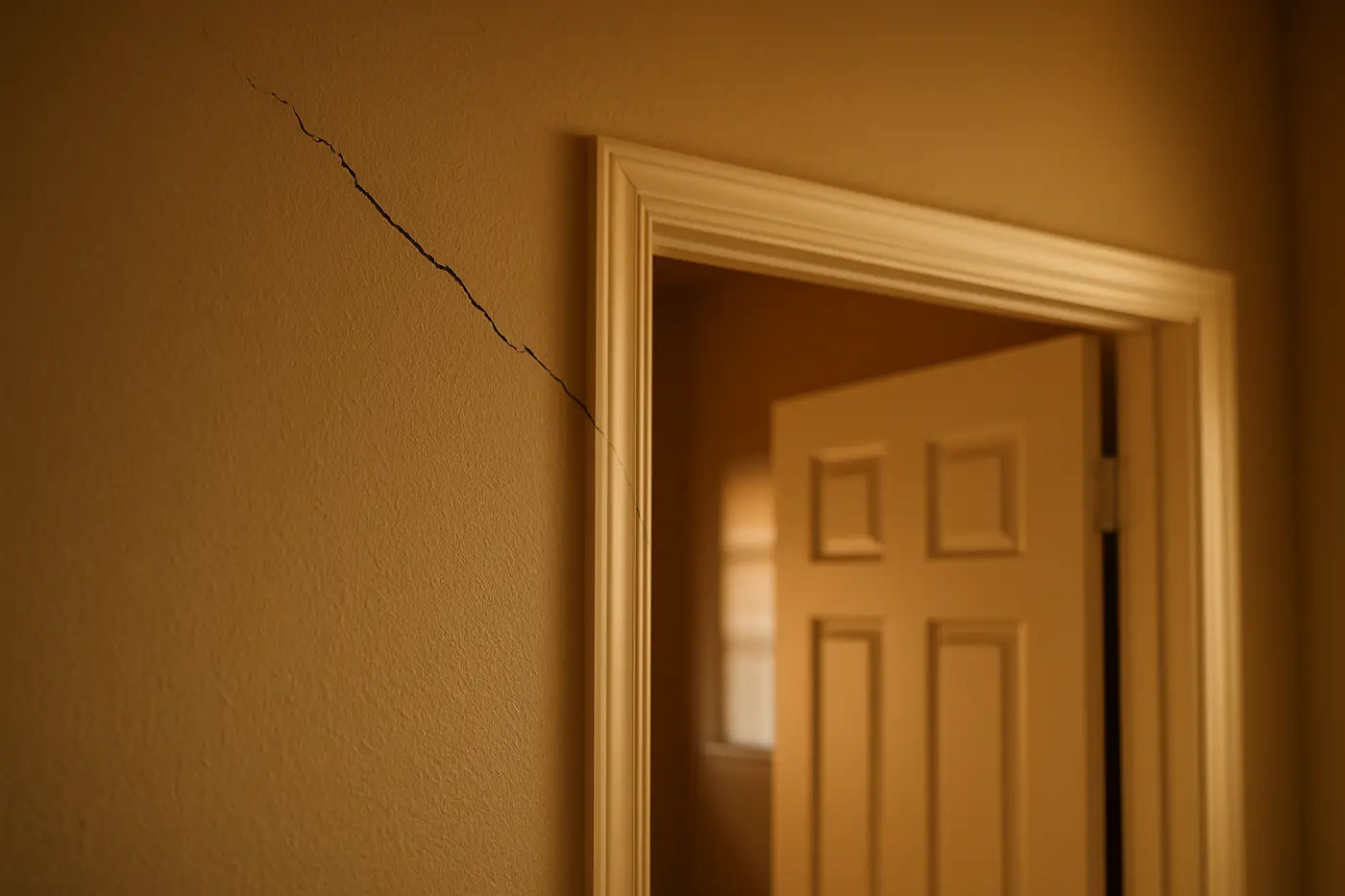
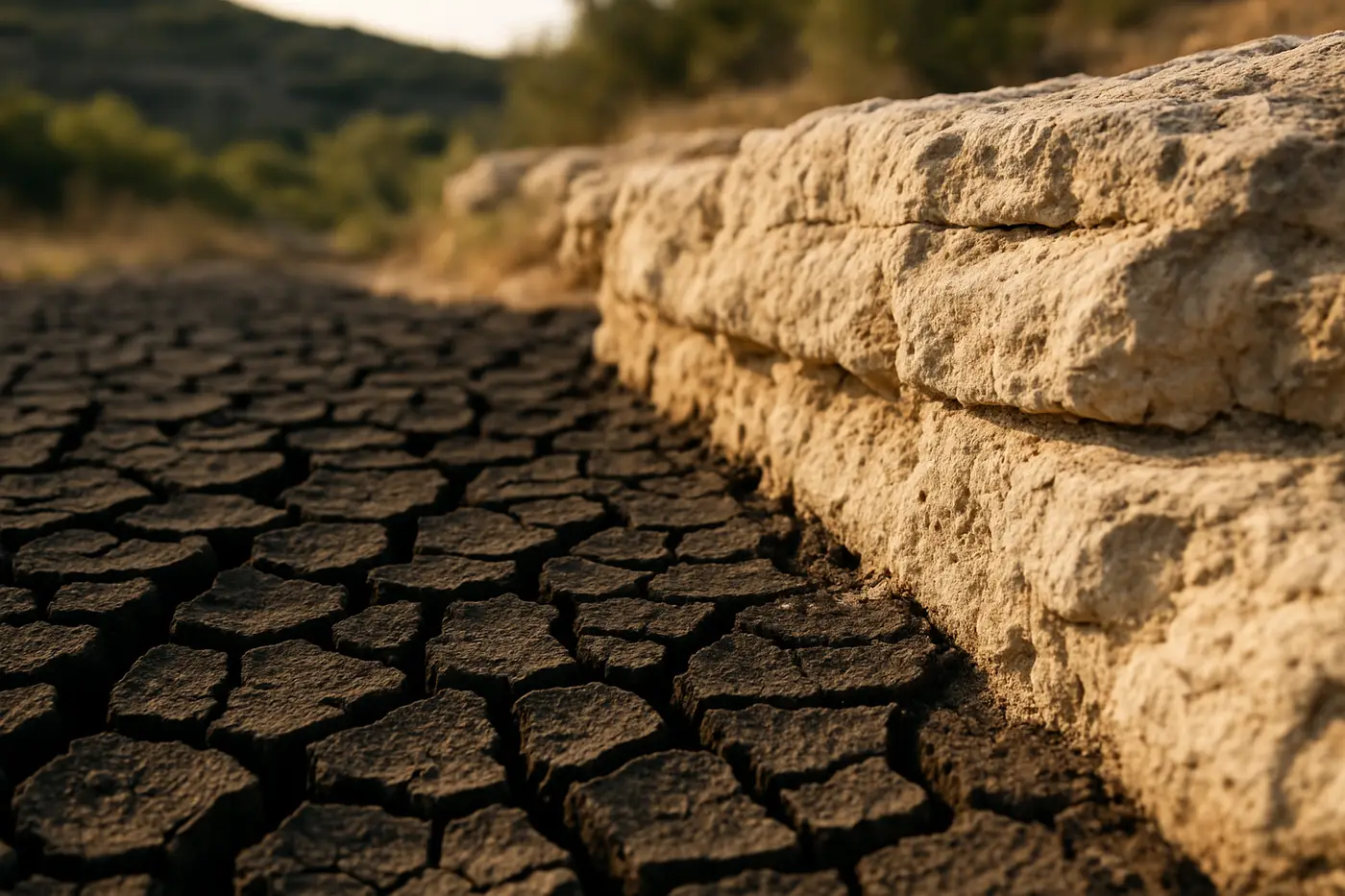
South and east of the Balcones fault, in Schertz, Cibolo, Converse and the south side, the Blackland clay under a slab swells after a wet spring and shrinks through a dry summer, and the edges of the slab lift and drop with it. That produces hairline cracks at door and window corners and in stem walls that open in August and close in November, the same width every year. A wet edge and a dry edge, from a downspout at one corner and a live oak at the other, tilt the slab and open a stair-step crack in the brick at the dry corner that gets wider each year. Under 1950s to 1980s slabs, a cast iron drain that corroded through wets the clay under a kitchen or bath and heaves that section, cracking the tile diagonally. North and west of the fault, in Alamo Ranch, Helotes and Stone Oak, post-tension slabs on cut-and-fill lots settle toward the low corner and open the brick above the garage door. In pier and beam houses, plaster cracks at door corners mean a beam sagged or a sill rotted underneath. The mechanics are laid out in why San Antonio homes have foundation problems.
Reading the crack
| Where and how | Usually means | Usual answer |
|---|---|---|
| Hairline at door or window corners, opens in August, closes in fall, same each year | Seasonal clay movement | Even moisture, fix downspouts, photograph and compare next year |
| Hairline in a garage slab, straight or map-like, unchanged for years | Shrinkage from the original pour | Nothing, or epoxy for appearance |
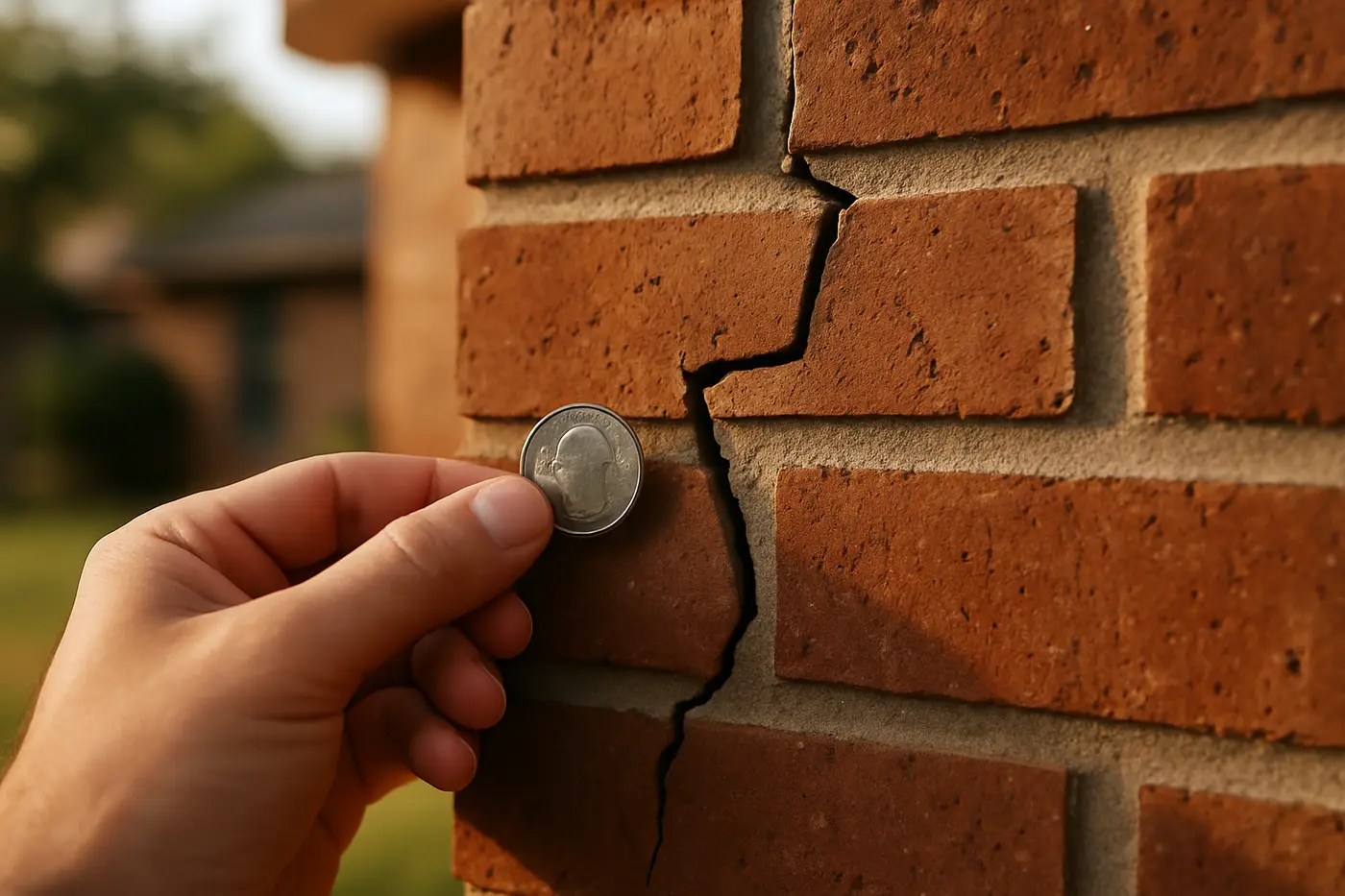
| Stair-step in brick at a corner or above the garage door, wider each year | Perimeter drop, one-sided moisture or fill settlement | Elevation survey, piers on that section, root barrier or drainage |
| Diagonal across a kitchen or bath floor, cracked tile, interior doors jam | Interior heave over a leaking drain | Hydrostatic test, leak repair, then survey again |
| Slab crack with a step you can feel between the sides | Slab bending over movement | Survey, fix the cause, epoxy once stable |
| Horizontal in a stem wall or retaining wall, or leaking water | Lateral soil pressure or water | Drainage, polyurethane injection, engineer if bowing |
| Plaster at door corners in a crawl-space house | Beam sag, sunk pier, rotted sill | Pier and beam repair, cosmetic patching after |
The crack map is done inside and out with a width, a photograph and a date for each one, tied to an elevation survey of the slab or floor. Together they answer the question the crack alone cannot: has the house moved, where, and why. The ranked signs are in signs of foundation problems in San Antonio homes.
Fix the cause, then the crack
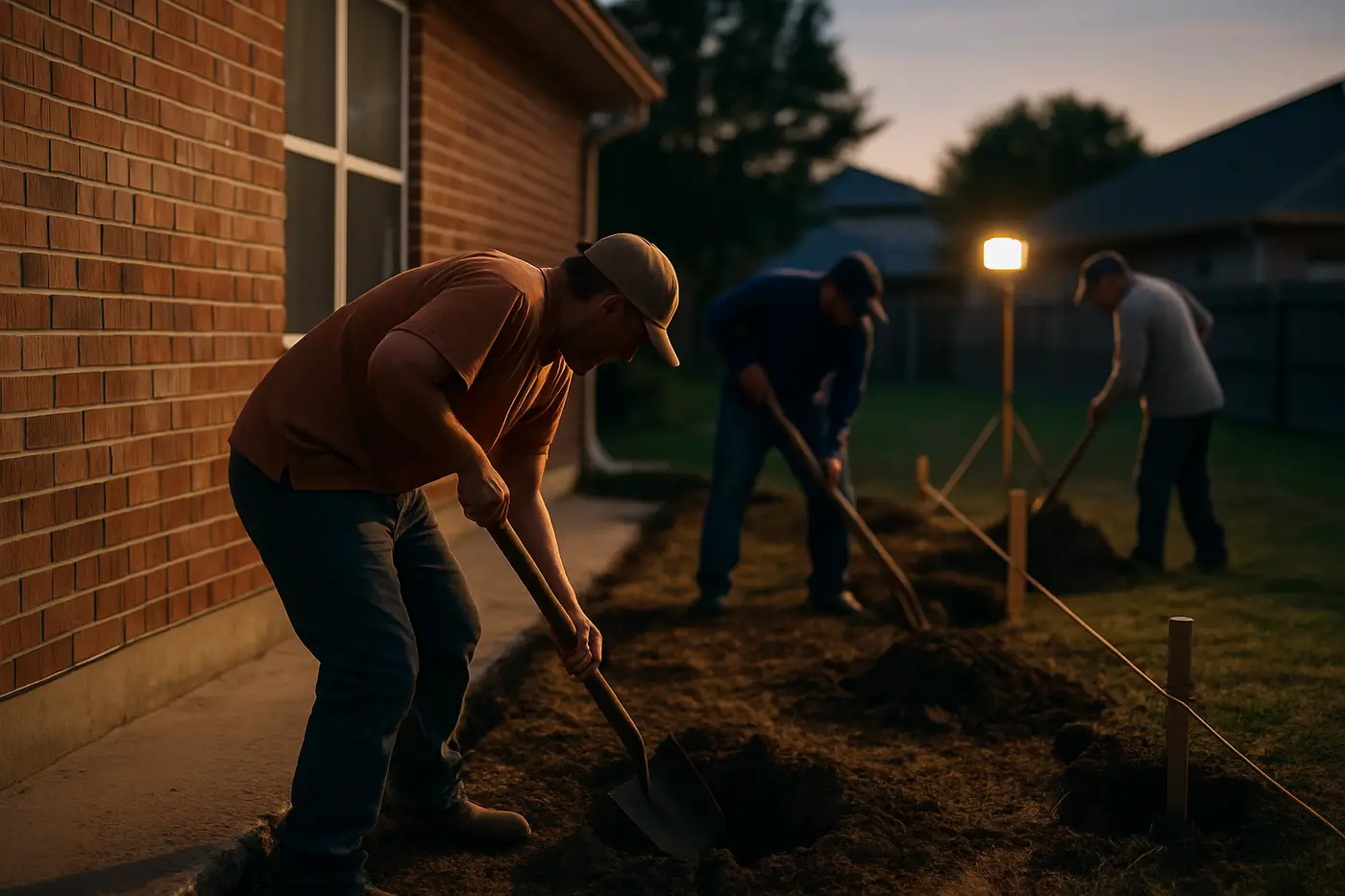
Seasonal cracks get moisture management: a soaker hose 12 to 18 inches from the foundation on a timer through the dry months, downspouts extended, beds against the house watered evenly on both sides. Nothing is injected, and the photo is compared after the next wet season.
Tree-side cracks get a root barrier between the tree and the foundation, $1,200 to $4,000, and often a few piers on the dropped corner if the survey shows an inch or more of differential.
Leak cracks get a hydrostatic test, and if it fails, the drain is repaired through a tunnel before anything else; the tile crack often closes on its own as the clay dries. That job is foundation leak repair.
Movement cracks get a pier plan on the moving section, with the count drawn on the floor plan, on the slab foundation repair basis. The brick crack usually closes most of the way during the lift.
Pier and beam cracks get a crawl space inspection and reshimming, new piers or a sill replaced; the plaster is patched afterward.
Injection
Once the foundation is stable, either because the survey shows it never moved or because the cause has been fixed, structural cracks in a slab or a stem wall are injected with epoxy, which bonds the two sides back together and restores the concrete across the crack. Cracks that let water through, in stem walls, the occasional basement or a retaining wall, are injected with polyurethane, which expands to seal them and stays flexible. Injection runs $300 to $1,500 depending on length and access, and it is cosmetic unless the cause is fixed; the proposal says so in those words. On a post-tension slab the cable layout is located before any drilling for injection ports.
Brick cracks are tuckpointed after a lift, and drywall is patched and painted; both are cosmetic work priced separately from piers, and a lift on a house that has dropped over years leaves a few new hairlines at door frames and ceiling corners that are part of the same cosmetic pass. Chasing a perfectly level house to close the last crack cracks more than it fixes.
What it costs
The evaluation and crack map are free for most homeowners, up to $250 when a written real-estate report is the deliverable. A hydrostatic test when the pattern points at a leak runs $250 to $500. Epoxy or polyurethane injection $300 to $1,500. A root barrier $1,200 to $4,000. If the crack means movement, pressed concrete pilings run $350 to $600 each with most homes needing 8 to 12. Every number goes in a written proposal after the evaluation.
While you wait
Photograph every crack with a coin for scale and write the month on the photo; a crack’s history over two seasons tells more than its width today. Draw a pencil line across the crack with a date so you can see if it grows. Extend any downspout that ends at a corner and even out the watering on both sides of the house. Do not fill a crack before it has been evaluated, because the filler hides what the crack was doing. Then send the form with the neighborhood, the foundation type if you know it and where the cracks are, and you will get an evaluation window and a written read on which cracks matter.
Last updated September 08, 2026