- #signs
- #cracks
- #sticking-doors
- #sloping-floors
- #san-antonio
The signs of foundation problems in San Antonio homes, from least to most serious, are hairline drywall cracks that open and close with the seasons, doors that stick in August, brick veneer cracks at corners and above garage doors that widen year over year, doors and windows that jam in every season, floors that slope or bounce, gaps opening under baseboards and at window frames, tile that cracked over a kitchen or bath, a slab crack with a step across it, and a floor or beam that dropped suddenly. The first two are the clay breathing and almost every house has them. The rest come in patterns, and the pattern is what tells the evaluation where to look.
Why the pattern matters more than the crack
Almost every San Antonio house sits on one of two soils. South and east of the Balcones fault it is Blackland clay that swells after a wet spring and shrinks through a dry summer; north and west it is limestone with thin soil and fill that settles unevenly. Both move houses, but they move them in recognizable ways, and each way leaves its own set of signs on the same side of the house. A single crack tells you almost nothing. Three signs on the northeast corner tell you the northeast corner has dropped, and the reasons are explained in why San Antonio homes have foundation problems.
The signs, ranked
| Rank | Sign | What it usually means | What to do |
|---|---|---|---|
| 1 | Hairline drywall cracks at door and window corners, same each year | Seasonal clay movement | Photograph, date, water evenly, compare next year |
| 2 | Doors that stick in late summer and close in the fall | Seasonal clay movement | Same; fix any downspout at that corner |
| 3 | Stair-step brick cracks at a corner or above the garage door, wider each year | Perimeter drop: dry corner, tree, fill settlement | Evaluation; likely piers on that section |
| 4 | Doors and windows that jam in every season | The house has moved and stayed moved | Evaluation with elevation survey |
| 5 | Gaps under baseboards, at window frames, between brick and trim | One side of the house tilting | Evaluation; likely piers on the low side |
| 6 | Floors that slope enough to feel, or a marble that rolls to one corner | Slab tilt, or pier and beam sag and drop | Evaluation; piers or crawl space work |
| 7 | Cracked or lifted tile over a kitchen or bath, interior doors jamming | Leaking drain heaving the interior | Hydrostatic plumbing test first |
| 8 | Slab crack with a step you can feel across it | Slab bending over movement | Evaluation this month |
| 9 | Floor bouncing, musty crawl space, porch pulling away | Pier and beam: rot, sunk piers, wet crawl space | Crawl space inspection |
| 10 | A floor or beam that dropped suddenly, a damp or smelly spot on a slab | Active failure or active leak | Evaluation this week |
Ranks 1 and 2: the clay breathing
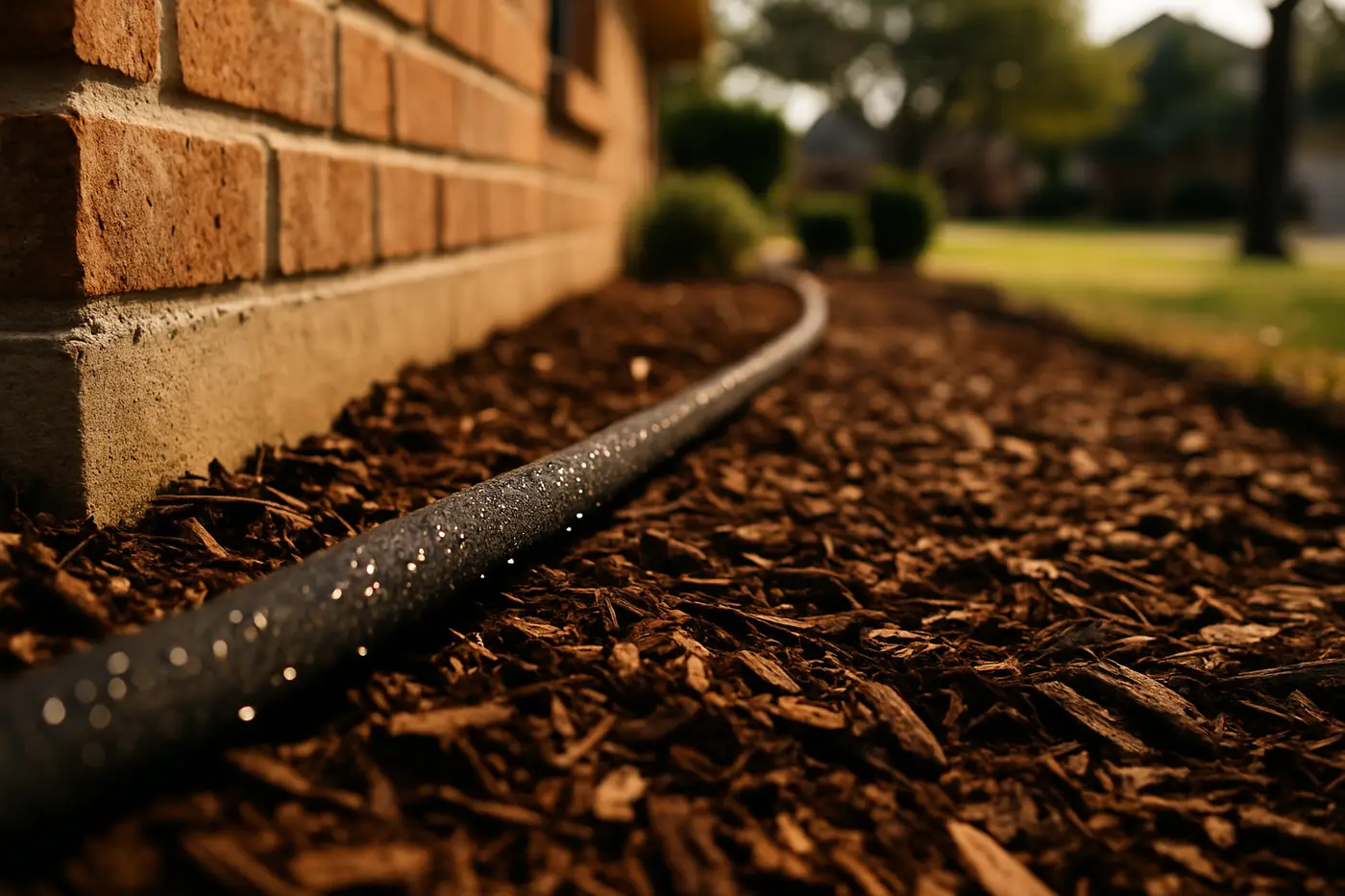
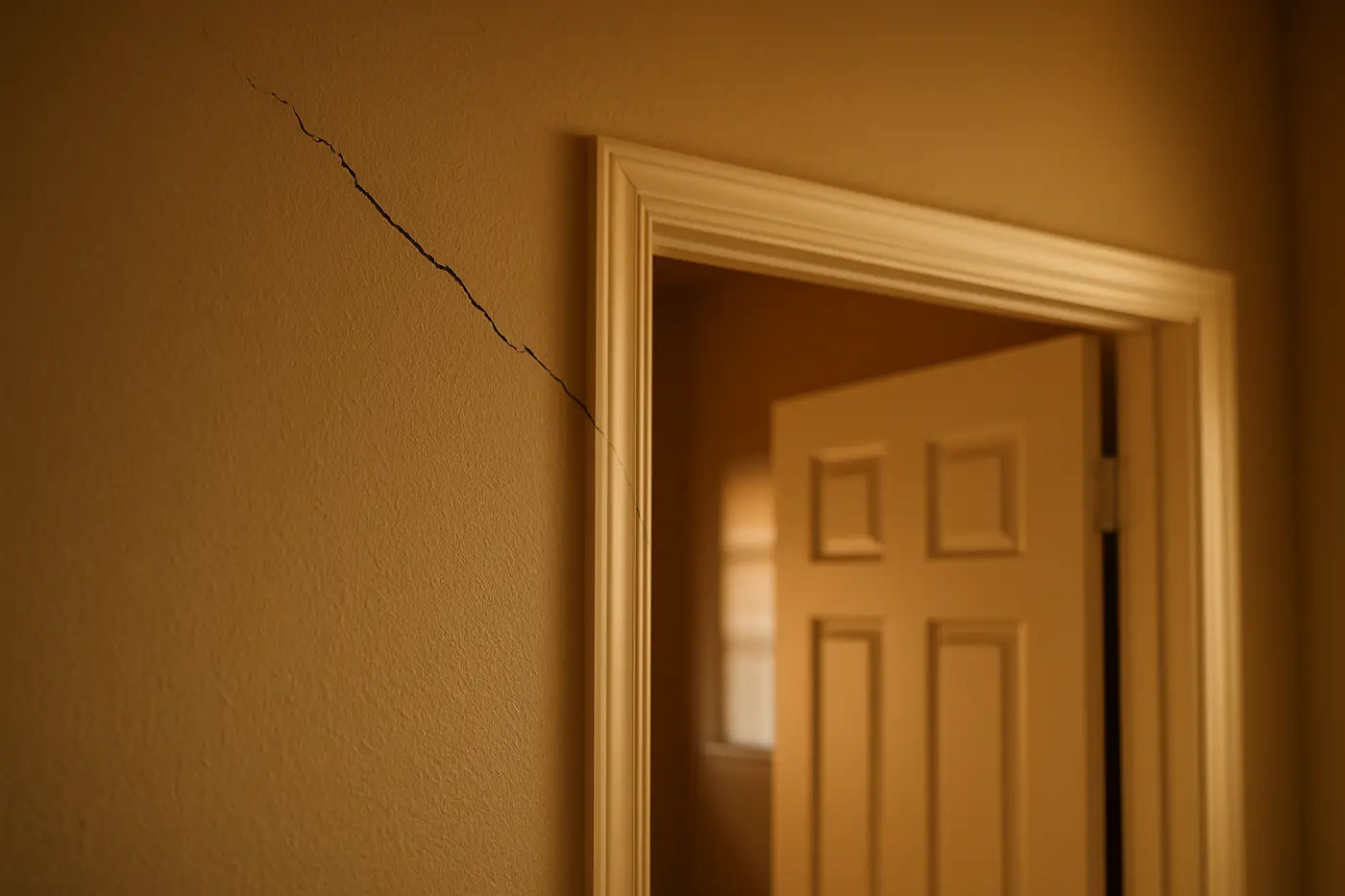
Hairline cracks at the corners of doors and windows, in a stem wall, or across a garage slab that open in August and close after the fall rains, the same width every year, are the expansive clay under the slab doing what it does. So is a door that sticks in the dry months and closes fine in November. These are the normal cost of living on Blackland clay, and the right response is not a pier but even moisture: a soaker hose 12 to 18 inches from the foundation on every side through the dry months, downspouts extended past the slab, and no bed on one side flooded nightly while the other side bakes. The method is in how to water your foundation in San Antonio. Photograph the crack with a coin and the month, and compare after the next wet season. If it is the same, it is the season.
Ranks 3 to 6: the house has moved
A stair-step crack in brick veneer at a corner or above a garage door, wider this year than last, is the classic sign of a perimeter drop, and it lines up with a live oak on that corner, a downspout that ends there, or, on the north side, fill that settled under it. Doors and windows that jam year-round rather than in August mean the frame is out of square and staying that way. Gaps under baseboards, at window frames or between the brick and the trim on one side mean that side is tilting. A floor that slopes enough to feel, or a marble that always rolls to the same corner, is the tilt made visible. Any two of these on the same side of the house are worth an evaluation, and the evaluation turns them into a number with an elevation survey: a corner an inch or more low against the rest of the house has moved and will keep moving, and the answer is piers on that section, on the slab foundation repair basis, with the count drawn on a plan.
Rank 7: the tile crack that means a leak
A diagonal crack across a tile floor over a kitchen or a bath, with the interior doors near it jamming while the front door is fine, is its own category. It usually means the slab is high in the middle and low at the edges, and on a 1950s to 1980s San Antonio slab that means a cast iron drain line has corroded through and has been wetting the clay under that room, heaving it. Piers around the perimeter will not fix it; they hold the edges up while the middle keeps rising. The first step is a hydrostatic plumbing test, and if it fails, the drain is repaired through a tunnel before anything else, on the foundation leak repair basis. A damp or smelly spot on the floor moves this sign to the top of the list, because it is wastewater under the house.
Rank 8: a step in the slab
A crack in the slab itself, seen in a garage or under lifted flooring, with one side higher than the other so you can feel a step across it, means the concrete is bending over movement or a heave. Hairline shrinkage cracks from the original pour are normal and never change; a stepped crack is not. On a post-tension slab, which is most of the metro’s subdivisions from the 1990s on, the slab is built to tilt as a unit rather than crack, so a stepped crack in one is a sign the slab is doing something it was not designed to do. Evaluate this month, and never cut, core or drill a post-tension slab for any repair without locating the cables.
Rank 9: pier and beam signs
In the pre-1960 houses of King William, Monte Vista, Alamo Heights, Seguin and the older south side, the signs come through the wood floor. A floor that bounces underfoot is a beam spanning too far or a compressed shim. A floor that slopes to one corner is a pier that sank or a sill that rotted at that corner. A musty crawl space, standing water after rain, visible rot at the sills, or a porch pulling away from the house all point at moisture underneath. Plaster cracks at door corners are the same story seen from above. These are a crawl space inspection rather than an elevation survey, and the fixes are reshimming, new piers, sill replacement and drying the crawl space, on the pier and beam repair basis.
Rank 10: sudden movement
Foundation movement on clay is seasonal and slow. Sudden movement is not the season. A floor or a beam that dropped in a week, a slab that fell after a known plumbing leak or a flood, brick that opened wide enough for a coin in a single summer, or a damp spot that appeared on a slab floor means something is actively failing or actively leaking, and it goes ahead of routine evaluations. Keep weight off a dropped room in a pier and beam house, keep children and pets off a damp spot on a slab, and call this week.
What to gather before the evaluation
Photograph every crack inside and out with a coin for scale and write the month on each photo. Draw a pencil line across the widest crack with a date. Put a 4-foot level on the floor in each room and note which way it tips. Note which doors stick and in which months. Walk the house in the rain and see where the downspouts empty and where water pools. Find any previous foundation paperwork from the closing file. With that, the foundation inspection is an hour of measuring instead of guessing, and it ends with a written answer: watch it, fix the water, or a pier plan with the number on it, which the cost guide puts in context.