- #watering
- #soaker-hose
- #saws
- #drought
- #prevention
- #san-antonio
Watering a foundation in San Antonio means keeping the moisture in the clay even all the way around the house through the dry months, with a soaker hose laid 12 to 18 inches out from the foundation on every side, run on a timer in the early morning or evening under the current SAWS drought stage. The goal is consistent moisture, not wet soil, and never one side more than the other. Done right, it stops the seasonal tilt that opens brick and jams doors, and on a house that has not actually moved, it is the whole fix. Done wrong, watering the side with the crack, it tilts the house the other way.
That is the short version. The rest is where, how much, when, and what to do on the limestone side of the city, where the advice flips.
Why even moisture is the goal
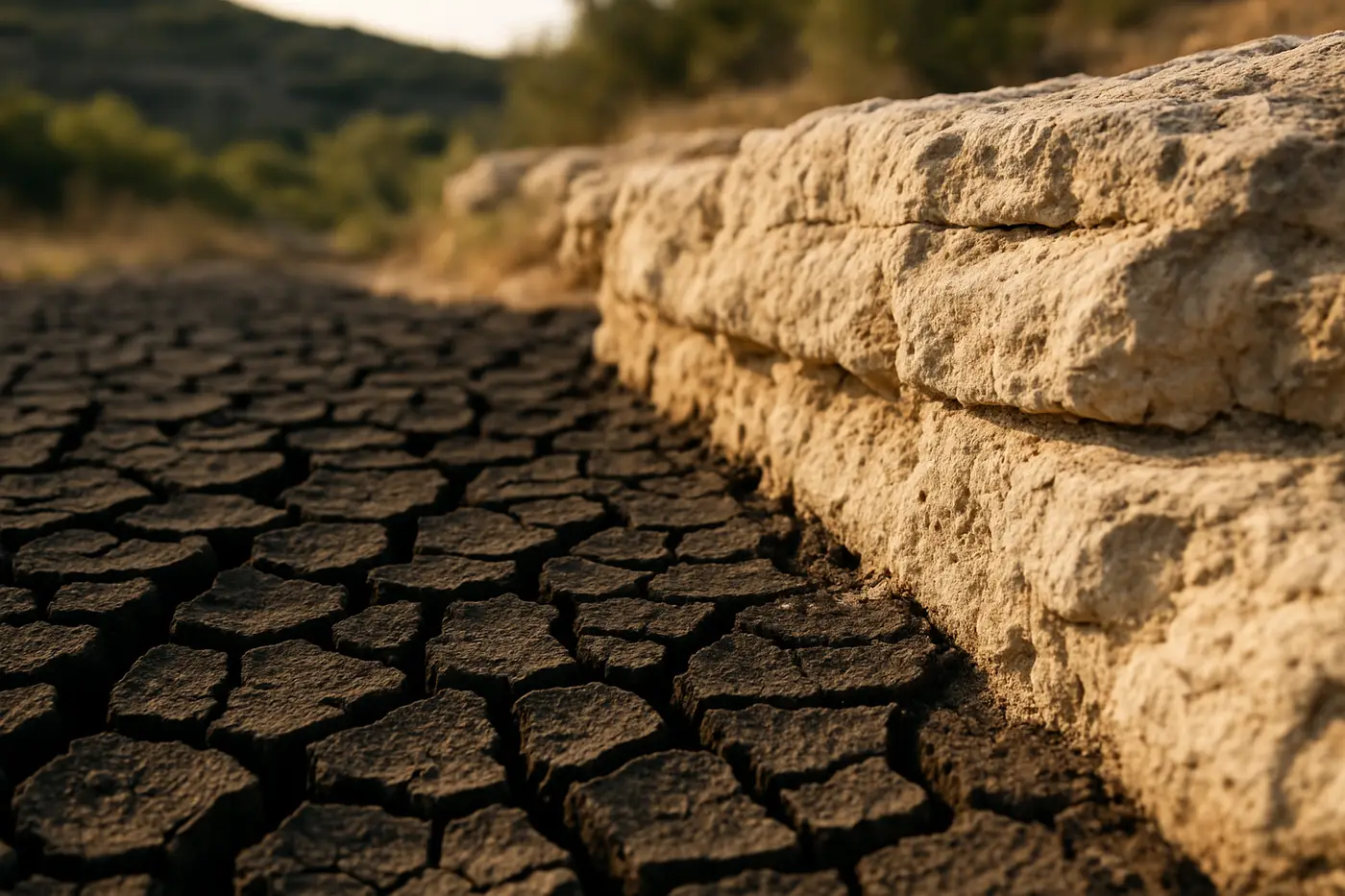
South and east of the Balcones fault, and across most of the city inside Loop 410, houses sit on Blackland clay that swells when it is wet and shrinks when it is dry. If the moisture were the same around the whole foundation, the slab would rise a little every spring and settle a little every summer as a unit, and nobody would notice. The damage comes from the difference: a downspout at one corner, a sprinkler on one bed, a live oak drinking from one side, bare ground on the other. The wet edge lifts, the dry edge drops, and the slab tilts between them. Foundation watering is not about adding water to the house; it is about removing the difference. The mechanics are in why San Antonio homes have foundation problems.
The setup
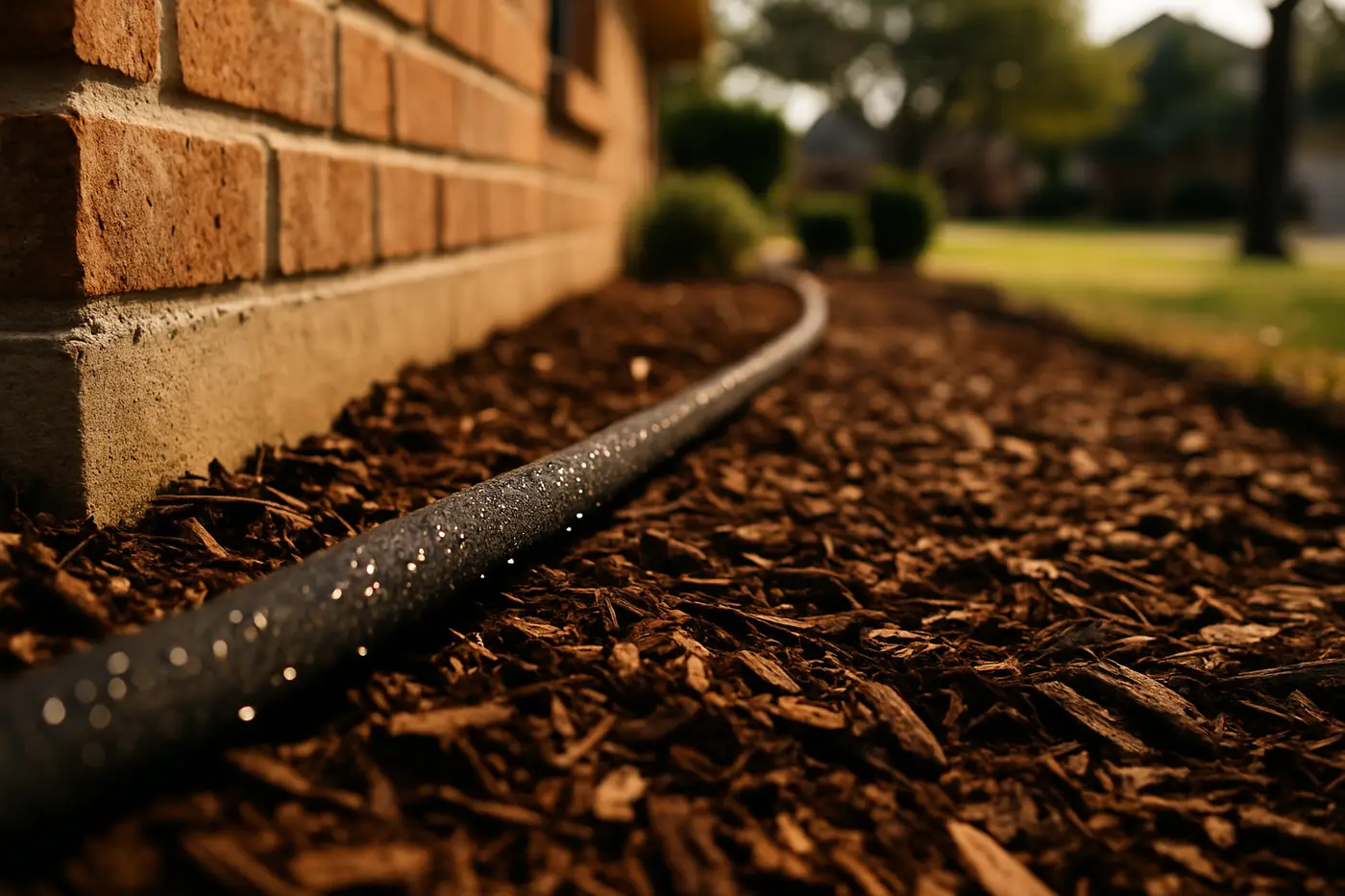
Soaker hose, not a sprinkler. A soaker hose weeps water slowly into the soil along its length, which is what clay wants; a sprinkler wets the surface, evaporates in the heat and runs off. Drip line with emitters works the same way.
Twelve to eighteen inches out. Not against the foundation. Water against the slab runs down the face of the grade beam and away; water a foot or so out soaks into the clay the slab actually bears on. On a bed against the house, lay it where the plants’ roots are, which is usually the right distance anyway.
All the way around. Including the side yard nobody looks at and the back corner behind the air conditioner. Leaving one side out is the same as watering only the other three.
Under mulch. A couple of inches of mulch keeps the hose from baking in the sun, keeps the water from evaporating before it soaks in, and hides it.
On a timer, with a regulator. A hose-bib timer runs it without you remembering, and a pressure regulator keeps the far end of a long run weeping instead of the near end flooding. A large house or a long run gets two or three zones off separate bibs.
How much and when
The test is the soil, not the clock. The morning after a run, push a screwdriver into the bed a foot out from the foundation. If it goes in six inches without a fight, the clay has what it needs. If the ground has cracks you can put a finger in, it needs more. If there is standing water or mud, it had too much. In a dry San Antonio summer that usually works out to two or three runs a week of twenty to forty minutes each, early morning or evening so the water soaks in instead of evaporating. Cut back when the wet season starts and stop when it rains. Restart when the cracks reappear.
| Season | Typical schedule on clay | Watch for |
|---|---|---|
| May–June, wet | Off unless a dry spell runs two weeks | Downspouts dumping at a corner, pooling |
| July–September, dry | 2–3 runs a week, 20–40 minutes, early or late | Cracks in the bed, doors starting to stick |
| September–October, wet | Off | Same as spring |
| November–April | Off, or a run every couple of weeks in a dry winter | Cracks in the bed |
| Drought year (2011, 2022–2023 type) | As July–September, from earlier in spring | The SAWS stage; check it monthly |
SAWS and the suburbs
The San Antonio Water System draws largely on the Edwards Aquifer, and its drought stages are triggered by the aquifer level at the monitoring well. Each stage restricts sprinkler irrigation to assigned days and hours by address. Soaker hoses and drip irrigation are treated more leniently than sprinklers but still carry time-of-day rules, and the rules tighten as the stage goes up, so check the current SAWS stage before you set the timer and again when the summer gets serious. New Braunfels Utilities, Seguin, Schertz, Cibolo, Boerne, Universal City and the other suburbs run their own utilities with their own stages and rules, and a house in Schertz follows Schertz, not SAWS. A watering plan from a foundation evaluation is written for the current stage and says what to adjust when it changes.
The limestone side: the advice flips
North and west of the fault, in Stone Oak, Shavano Park, Hollywood Park, Helotes, Boerne and Garden Ridge, the soil is thin over limestone and the slab sits on a cut-and-fill pad. Clay swelling is not the problem; water in the fill is. A soaker hose there puts water into the fill under the low corner, which is exactly what makes it settle. On the limestone side the job is drainage: gutters, downspouts piped well past the slab, grading that slopes away, and no bed against the house watered nightly. If the house has a clay pocket, which happens along the creeks and in the transition band around Alamo Heights and Shavano Park, the evaluation says which side is which. The drainage fixes are on the drainage correction page.
The mistakes
Watering only the side with the crack. The most common one. The dry corner dropped, so the owner runs a hose there, the clay swells, that side lifts, and the slab tilts the other way and opens the brick on the opposite corner. Water every side or none.
Flooding the bed against the house. A sprinkler zone that soaks one bed nightly makes a wet edge as surely as a downspout does, and it wastes water under any SAWS stage. Even it out or turn it off.
Ignoring the downspouts. Watering evenly while one downspout puts a hundred gallons at a corner every storm is a wet edge with extra steps. Extend them past the slab first; it is the cheapest fix on the list.
Expecting a lift. Even moisture stops movement and lets seasonal cracks close. It does not raise a corner that has dropped an inch and a half. That section needs piers, on the slab foundation repair basis, and then even watering keeps the rest of the house stable afterward.
Watering a pier and beam house. The crawl space under a pre-1960 house needs to be dry, not moist. Get the water away from the skirting, fix the drains, and put down a moisture barrier; do not run a soaker hose around a crawl space.
When watering is the whole fix
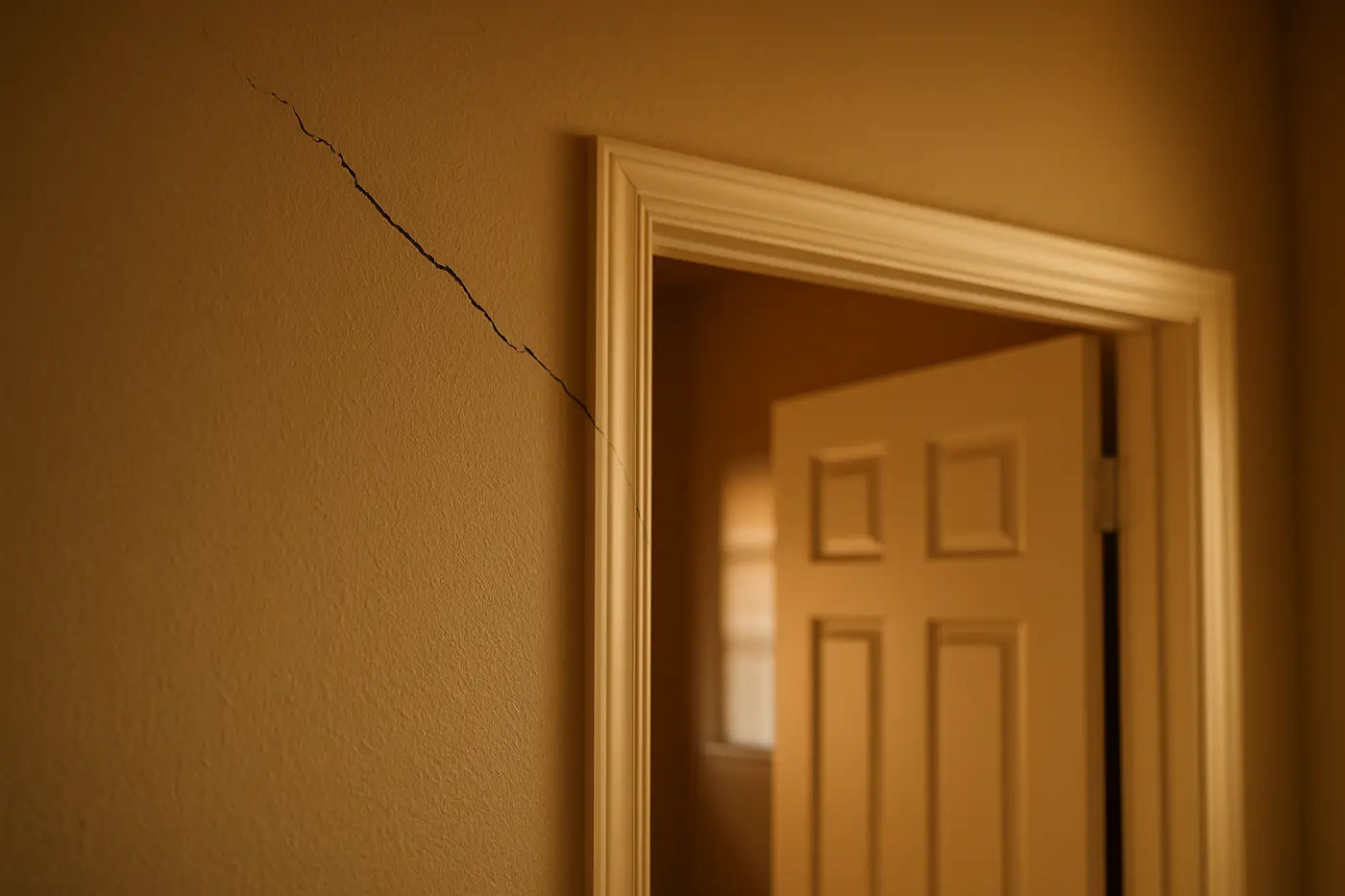
A lot of San Antonio evaluations end here. If the elevation survey reads within about a quarter inch across the house after a dry summer and the cracks are hairlines that close after rain, the house is doing what clay does, and the written answer is drainage and a watering plan, checked against the same survey after the next wet season. That is a $1,000 to $4,000 answer instead of a $4,500 to $14,000 one, and the signs that separate the two are in signs of foundation problems in San Antonio homes. If the survey shows a corner an inch or more low, watering is still part of the plan, after the piers, and the cost guide puts the rest of the number in context.
Start this week
Extend the worst downspout. Walk the house and find the side nobody waters. Lay a soaker hose 12 to 18 inches out on that side and the others, under mulch, on a timer set for early morning under the current SAWS or local stage. Push a screwdriver into the bed the next morning. Photograph the widest crack with a coin and the date, and compare it in November. If it closed, the house is breathing. If it did not, book the evaluation.