Pier and Beam Foundation Repair
Reshimming, rotted sill and beam replacement, new piers and crawl space moisture control for pre-1960 homes.
North San Antonio · 78213
Slab and pier and beam foundation repair for Castle Hills homes and businesses: inspections, piers, leveling, under-slab leak repair, crack repair and drainage correction, with the plan and the price in writing before work starts.
Tell us what the house is doing. You get an honest read on urgency and a written proposal after the evaluation.
~30 min
Typical travel to Castle Hills
78213
Castle Hills ZIP code
~62 yrs
Typical home age
8–12
Piers most homes need
Foundations in Castle Hills
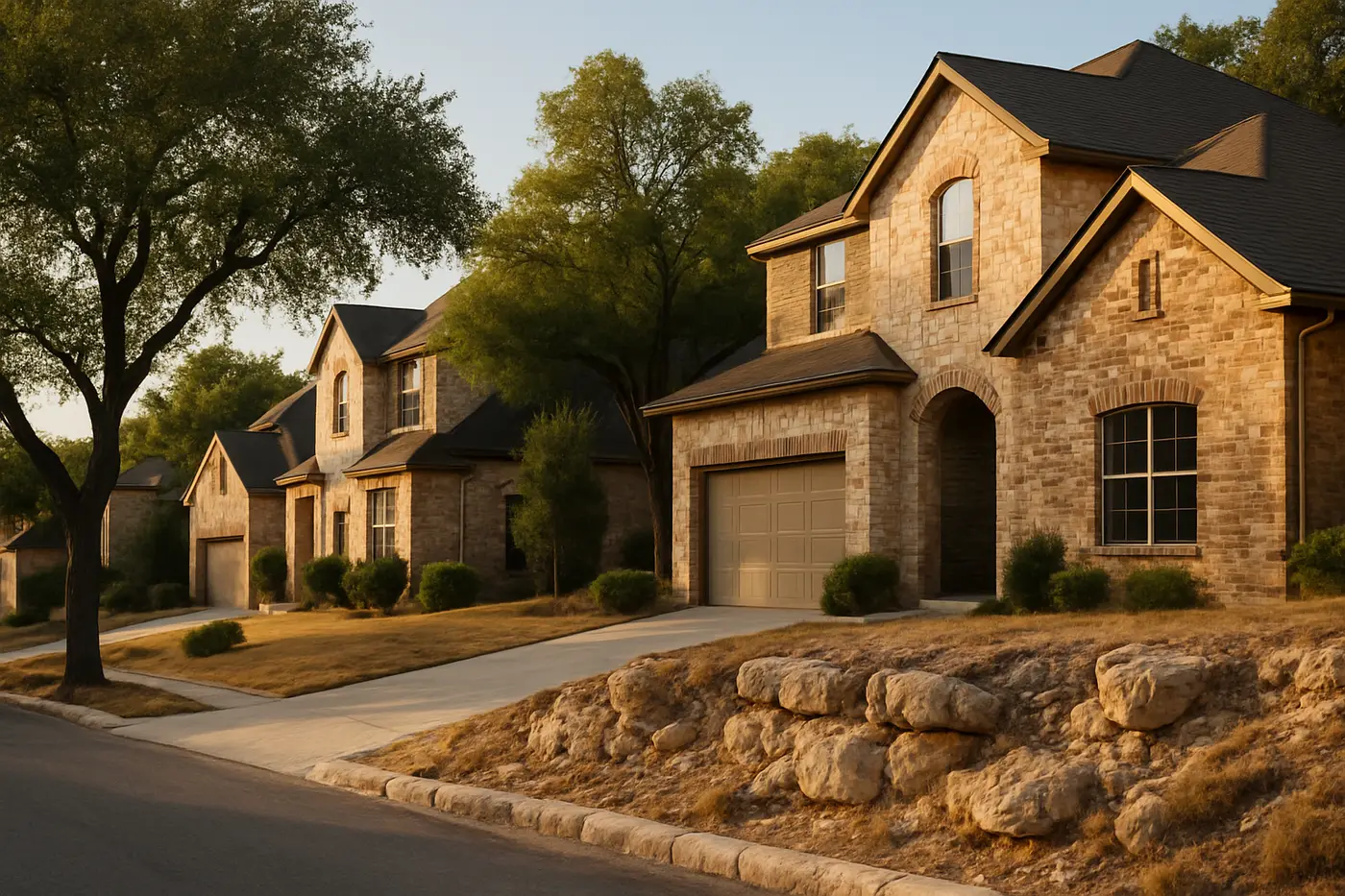
Castle Hills is an enclave city inside Loop 410 along NW Military Highway: 1950s to 1960s ranch homes on thin conventional slabs with cast iron drains underneath and live oaks that were planted with the houses. It runs its own permit office.
Working the area
Regular work around NW Military Highway, Loop 410, Castle Hills City Hall and Blanco Road, and the streets between.
Castle Hills is the textbook 1950s and 1960s slab. The ranch homes along NW Military Highway and Blanco Road were poured thin, with light reinforcement, directly on the clay-and-chalk transition soil, and the drain lines under them are the original cast iron, which after sixty years has corroded through at the bottom. The classic call here is a kitchen or a hall bath floor that has risen, a crack across a tile floor, or a door in the middle of the house that will not close while the corners of the house have dropped. That pattern, high in the middle and low at the edges, is a leaking drain saturating the clay under the interior while the live oaks in the yard dry the clay under the perimeter, and the hydrostatic test finds the leak more often than not.
Fixing the plumbing comes before the piers, or the piers lift a house that keeps heaving. Enclosed carports and 1970s additions on their own footings pull away from the original slab and crack the joint. Castle Hills is its own city with its own permit office and inspections, small enough that the inspector knows the streets. Most jobs here are pressed concrete pilings around the perimeter, interior piers where a drain has been repaired, and a root barrier on the live oak side.
What we see most
Not generic pain points. These are the patterns behind most Castle Hills evaluations, roughly in the order they land on the schedule.
Cast iron drain lines corroded and leaking under 1950s to 1960s slabs, heaving kitchens and bathrooms
Thin conventional slabs cracking at the corners where mature live oaks dry the clay on one side
Interior heave and exterior drop on the same house, leaving a slab that is high in the middle and low at the edges
Additions and enclosed carports on separate footings moving away from the original slab
The City of Castle Hills running its own permit office inside Loop 410
Something else in Castle Hills?
Sloping floors, a heaving slab, a crawl space that smells damp, a patio that dropped: if it is the foundation, we can evaluate it. Tell us what the house is doing and when it started.
Request an evaluationServices in Castle Hills
Reshimming, rotted sill and beam replacement, new piers and crawl space moisture control for pre-1960 homes.
Pressed concrete pilings, steel piers or drilled piers under a settled slab, with a hydrostatic test before and after the lift.
Elevation survey, crack mapping and an honest read on whether the house needs piers, drainage or just watching.
Lifting a settled house back toward level in stages, doors closing again, and a written elevation record.
Which cracks are cosmetic, which are structural, and epoxy or polyurethane injection once the cause is fixed.
Hydrostatic testing, tunneling under the slab and drain repair when wet clay is heaving one side of the house.
Before we arrive
Foundation movement on clay is a story told over seasons. The more of it you can show us, the more honest the answer.
Every crack inside and out with a coin for scale, plus the month. Seasonal movement on clay shows up as cracks that open in August and close in November.
Where do the downspouts dump, where does water pool after a storm, which side has the big live oak, and is there a wet spot that never dries.
Previous repair warranties, engineer's letters, the seller's disclosure and any plumbing test. They change the plan and sometimes cover the work.
Neighborhood, foundation type if you know it, what the house is doing and your timing. You get an evaluation window and what to watch for meanwhile.
Nearby neighborhoods
Thin 1960s slabs inside Loop 410, post-tension slabs on limestone north of 1604. Same crew, same evaluation and the same written proposal across every North San Antonio ZIP code.
All service areasInsurance, permits and paperwork
Texas decides foundation claims on cause, and Texas real estate runs on disclosure. We photograph, measure and write the report from the first visit.
Castle Hills questions
Straight answers on scheduling, local failure patterns, cost per pier and insurance.
All questionsEvaluations in Castle Hills are usually scheduled within a few days, and typical travel is around 30 minutes from wherever the crew is working. Active movement after a plumbing leak or a sudden drop goes to the front of the queue. You get a real window on the phone rather than a promise. While you wait, photograph the cracks with a coin for scale and note where water pools around the slab after rain.
The pattern we see most in Castle Hills is Cast iron drain lines corroded and leaking under 1950s to 1960s slabs, heaving kitchens and bathrooms, followed by thin conventional slabs cracking at the corners where mature live oaks dry the clay on one side. Castle Hills is an enclave city inside Loop 410 along NW Military Highway: 1950s to 1960s ranch homes on thin conventional slabs with cast iron drains underneath and live oaks that were planted with the houses. It runs its own permit office. Drought summers and wet springs move the soil everywhere in the metro, so seasonal cracks and sticking doors show up in every neighborhood.
Typical San Antonio ranges apply in Castle Hills: pressed concrete pilings run $350 to $600 per pier, steel piers $1,000 to $1,800, and most homes need 8 to 12 piers, so a typical slab repair lands between $4,500 and $14,000. Pier and beam leveling runs $1,500 to $5,000 before any rotted wood is replaced. Drainage correction often costs less than piers and is sometimes the whole fix. Every number is in a written proposal after the evaluation.
Usually not for soil movement. Texas homeowners policies generally exclude damage from settling, shrinking and expansion of the soil. If a plumbing leak under the slab caused the movement, part of the repair may be covered depending on the policy and any foundation or seepage endorsement, often with a cap. A hydrostatic plumbing test, dated photos and an engineer's report are what the adjuster asks for.
Foundation repair in Castle Hills
Evaluation window for Castle Hills, an honest read on urgency, and a written proposal only if the house needs work.